Category: Uncategorized

  • ‘Player’s Era’ Sparks Debate on Why Fans Watch

    ‘Player’s Era’ Sparks Debate on Why Fans Watch

    If you go to a festival in Vegas, you can’t be frightened by the freakshow. 

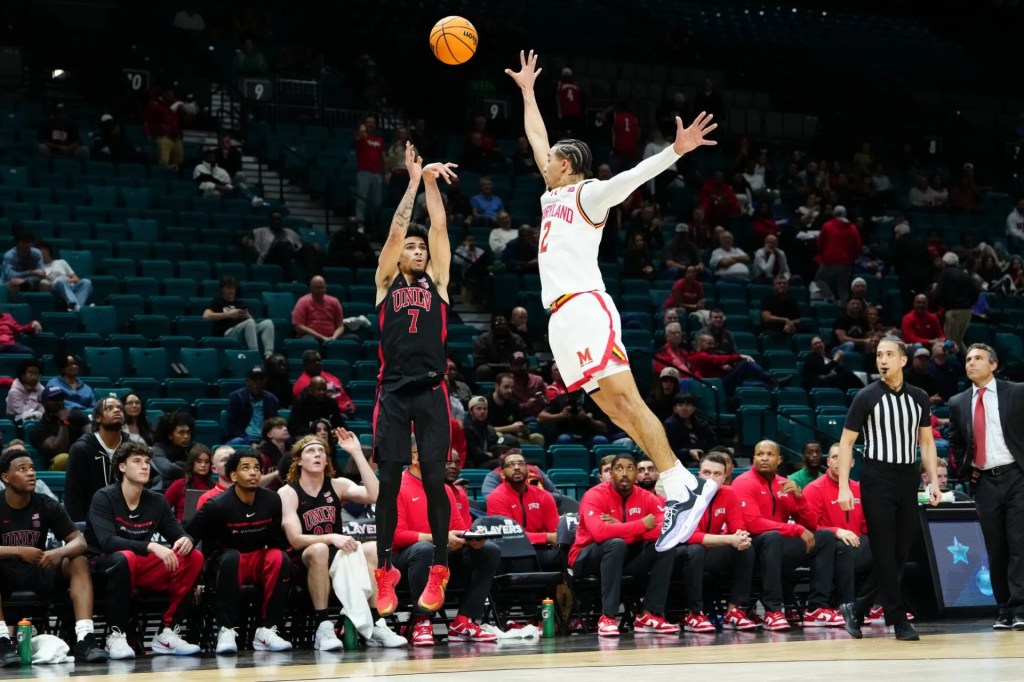
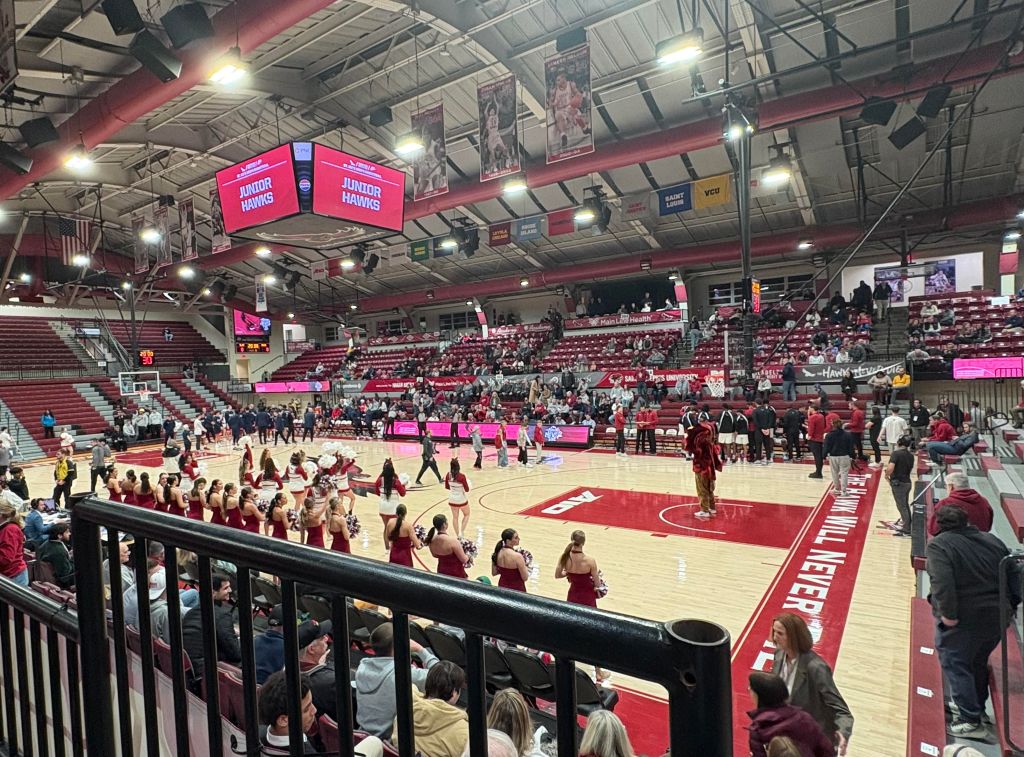
    Yesterday, as the second rendition of the Player’s Era Festival showcased some of the sports biggest brands in a semi-vacant Vegas arena, the college basketball internet world reached somewhat of an inflection point. 

    The event served as a microcosm of the times. To many, it represents (whether fairly or unfairly), a reflection into the tide turned away from the pageantry and eccentricity loved by college ball fans and into the “soulless” seas of capitalists or gambling groups looking to squeeze dry said intricacies out. 

    While many watched the formidable Feast week competitions, the tension continued to grow. X accounts small and big, burner and brave voiced their opinions on the event in waves. Curry Hicks Sage, host of popular mediums Burning Sage and SearchSZN, took to his usual Spaces post to field more moaning and maybe try to find some nuance on the issue while hundreds listened in. Some claimed “it’s great ball!” while others remained it was never about the ball to begin with. Old guard journalists planted their flag on the side of And-1 architect and tournament founder, Seth Berger, in some cases even telling fans to just simply “get used to it.”

    It seems pretty clear that the issue is not with the event itself, although plenty to dissect in that regard, most notably the bizarre bracketless format, but with what the event actually represents. The sport sits as a shell of itself in pursuit of new order, chaos from a public reaction perspective spews through on a daily basis. 

    Part of college basketball’s charm is that it often plays out like a parody. Fans revel in the weird moments, weird mascots, future pros and Nike execs packed the walls of insular high school gyms. Ask any Atlantic 10 fan what their favorite basketball moment of the last decade was and they’ll probably say when that kid walked out on the court dressed as a delivery courier with a bag of McDonalds and drink accompaniment during a Duquesne game. The parody now is of a different ilk. The parody now is how much more ridiculous is this going to get? How far are we going to go?

    You can just pay guys directly to play for your school? Transfer as many times as you want?

    Now we have G-League players cosplaying as high school seniors, narrowing down their “top 3” and posing in university uniforms? 

    G-League players are the preferred workers in the new era. The style of play in the G-League is unsurprisingly individualistic. You can look at each “game” as more of a combine event, and each “teammate” as a stepping stone to outleap the other. Through interviews with a plethora of former Big 5 greats who stepped in the development league, most share the sentiment about how the league operates. Guys want theirs, and the win-loss column is a simple formality in many cases. It’s not necessarily the most compelling product to watch, is that what we want college basketball to become? I’m not sure. 

    MY BIAS: 

    I am not a fan of Kansas or Kentucky, either rival in Durham or Chapel Hill, or even my local powerhouse Villanova. I am but a sad little Hawk, digging my beak through the West Philadelphia mud for worms as I watch the apex predators of college basketball huddle up and pool resources (whether that be in the literal sense or the resource of opportunity for bids to March). The gap continues to radically grow between what I watch and root for and whatever this is. This is not the same game, and while it never necessarily was, at least maybe before there was the illusion that it was. That illusion that we were all in this together has been pulled away. There are the 32 teams that will compete in next year’s Player’s Era, then there is perhaps another slender layer of good filler, then there is my team and its constituents – not the Cinderellas – but the grotesque, undesirable ogres. I never had the thought in my head that my mid-major would win the National Championship, but now it feels like making the tournament alone is almost as improbable. 

    So, as to surmise, you could say this event is not necessarily for people like me! But, maybe it is for the majority.

    ON THE CONTRARY:

    The level of hoop being hooped at the Player’s Era is very good. Not like never-before seen good, as big-time MTEs like Maui have always facilitated the highest anticipated matchups, but very high-level nonetheless. It’s fun to watch, and not just to degenerate gamblers like some purists may grumble. 

    The irony in all of this debate and frustration is that, in all of this soul-sucking or corporatizing talk, the crux really is something that most sensible people have been calling for forever: player play. I can’t think of a single sound reason why you wouldn’t want college athletes to be paid appropriately for what they bring into our universities. Forever we have blamed the NCAA and the institutions within it, fairly claiming that they have safeguarded the profits. Now, the floodgates have opened, the wild west has ensued, and it really feels like we’re at a very specific point in time where this can go one way or the other, and most of us know which way that is. It’s so overt, over-the-top, and untraditional that it makes you question how you feel about the process of paying players, an idea that practically everyone should agree on.

    I’m not sure if the Player’s Era is that turning point, or if it’s just the scapegoat that we use to get our frustrations out about the way things are turning.

  • City Coaching Carousel Reflects Larger NCAA Climate

    City Coaching Carousel Reflects Larger NCAA Climate

    Legendary St. Joe’s frontman Phil Martelli sat, stood, and sometimes frantically danced on the sidelines of college basketball courts for nearly four decades. 

    Today, he watches from the crowd – his clipboard perhaps used as coloring fodder for his grandkids and his whistle hopefully hung in the halls of the Palestra. His son, Phil Martelli Jr., is set to coach a historic program of his own, one that’s recently dominated the very same conference that Martelli Sr. made headwaves in. 

    The presence of a guy like Martelli is missed on Hawk Hill, it’s missed in the Philadelphia area, and it’s missed all over college basketball. In wake of the last few years – a whirlwind of change and disruption within a landscape formerly coveted for its tradition, its pageantry, and its passion – few of these figureheads still exist. The Joes have turned to Pros, and for many of those iconic coaches we see as synonymous with the sport – it’s time for the Joes to go. 

    “To each his own,” says Phil Martelli, who granted me an interview earlier this year. “Whether it’s Jay Wright’s decision or Tony Bennet’s decision, Roy Williams’ decision or Jim Boheim’s decision, it’s different.”

    Martelli joined me via Zoom from his cell-phone. His boomer camera angle is reminiscent of a FaceTime call with your father. His wisdom and insights into today’s game were equally paternal – a basketball caregiver with a propensity to focus more on off court maturity than on, countless former Hawks that I’ve spoken to including the likes of Marvin O’Connor, Ryan Daly, Shavar Newkirk, and others rave about Martelli’s holistic approach to not just player development, but “human development.”

    While Martelli doesn’t necessarily want to place all of the recent coaching resignations or transitions into a one-size-fits-all, “it’s a young man’s game now” bucket, he does recognize a generational loss of spirit. 

    “The disappointment for me is that, morphing into this professional world… the joy.” Martelli said. “I sense a lack of joy in pursuit of kids – there was joy in recruiting.. Can we get this kid? Do we have something that this kid would latch onto? The joy of the competition. Even in the high school settings. Think about how many of these top level players are not going to their same high schools. They’re going all around the country to play for super teams or teams that are going to travel. The joy of playing with your friends. The joy of going to senior prom, junior prom, the joy of being involved in community service. We’ve pushed this so far forward now, that we have 15 and 16 year olds having agents.”

    It’s not all doom and gloom for Martelli, however. He still has hope and trust in the college athletics institution, albeit one that’s in the eye of a complicated storm.

    “I’m not here to say good, bad, woe is us, It’s a young man’s game. I don’t believe that. I believe that you can still build this on trust and I believe that each coach made a decision that was best for their family at this time and I think we can’t minimize the family dynamic on each of these coaches.”

    It’s hard to not relate the bigger picture NCAA complications and discussions around the wild west nature of NIL, transfers, and eligibity to our own backyard. At its core, the Big 5 is a microcosm of what makes college basketball special. It’s insular, its cyclical in the sense that it pays homage to the past, and it’s even a little weird. It’s a relic of what the sport was founded on: competition and unique tradition.

    “I think the beauty of the Big 5 – as it was and as it can be – the beauty is this.” Martelli said. “Everybody that watches this, at some point, went in their backyard and played whiffleball against their neighbor, their brother, their cousin. If it wasn’t whiffleball and it was cold out, they played knee football in the basement. They played 3 on 3 with guys on their neighborhood and school. As you advance, that’s the beauty of the big 5 – you’re in the yard.”

    Still, it’s hard to recognize the Big 5 as we knew it without the illustrious coaches so crucial to it and representative of it.

    A guy like Jay Wright, who seemingly had the world in his hands tucked under his tailored suit and cufflinks typically doesn’t just walk away from a perennial powerhouse. It’s head scratching to a point, but makes perfect sense at the same time. 

    Dealing with agents and worth figures, trying to instill a culture or style with five new guys each on their second, third, maybe fourth team. Continuing the “Villanova Way” with players who aren’t Villanovain and didn’t buy in from the jump. The coaching qualms today are real and persistent, and they’ve obviously had an immediate impact on the success and continuity of these Philadelphia programs. 

    After Wright’s departure, in came Kyle Neptune to fill the impossible Italian leather shoes of him. After three unpromising seasons, his services were decidedly no longer needed. Billy Lange similarly lept into the shadow of a giant on City Avenue, only to find a similar dilemma on the opposite side of the Holy War. Fran Dunphy, dubbed Mr. Big 5, did all he could to help his Alma mater La Salle through coaching transitions and Steve Donahue struggled to keep Penn afloat only to now somehow get fired into a better job with a better commute at St. Joe’s. Perhaps no Big 5 team had more iconic coaches than Temple – highlighted by John Chaney who probably would not have minced words about the state of affairs in the sport. 

    The teams in this city rely on coaches. They rely on consistency and culture. These aren’t just buzzwords scribbled on blackboards or fluff for the flock of reporters after losses, they are tangible, and the results speak for themselves.

    As Big 5 enthusiasts, we wish the best of luck to all our current coaches in the tradition. Hopefully, this generation can usher in new special moments and new standards to programs that all need it. 

  • Joes Woes: Rinsing, Repeating, and Reflapping on City Ave

    Joes Woes: Rinsing, Repeating, and Reflapping on City Ave

    The Saint Joe’s rollercoaster experience is one that would bring plenty of crying kids and possibly even a collection of lawsuits to Dorney Park or Universal Studios.


    You start at a relatively high perch, a familiar vantage point that brings excitement for what’s to come. The ride then dips, understandably as gravity and mechanical advantage require a certain pattern for momentum. As you reclimb up, you get that pit in your stomach. It’s the slow burn of anticipation for reaching new heights. The crux of these rides? What feels like an eternity to make it to the top can never prepare you for the split second that takes you down back to the bottom. What comes up must come down. 


    The St. Joe’s men’s basketball program, and its surrounding fanbase and community, are quite familiar with this ride. They’re so immersed in it they’ve essentially all become carneys at this point. Up and down, high expectations and low-end results. Massive wins against formidable opponents and flashes of at-large genius only to produce head-scratching performances against teams that sound like somebody combined the name of four different universities into one. The recurring cycle is equal parts exhausting and disheartening. 


    The worst part about St. Joes’ struggles is not the losses themselves nor the inability to establish themselves in or out of conference play. The worst part is the hype and anticipation that surrounds them, specifically the last two off-seasons. It’s what produces a strange crowd phenomenon of a sold-out Hagan on one night and an empty gym the next. Before last year’s season, it was reasonable to expect growing pains throughout this tricky transition. In fact, a fan may look back and think of these times with crimson-colored glasses. A time where change was on the horizon. As we’ve learned, periods where something is “being built” can often be more charming than the finished product. The “Process” Sixers are a pretty good example of that, as our plenty of organizations that underwent a rebuild or a so-called “culture change.” 


    There are some St. Joe’s fans that have unreasonable dreams. They want to make the tournament every year or want to dominate the A10 annually. I think those are the minority, however. Most SJU fans understand the bit – they get the gig. St. Joe’s is not Gonzaga, nor are they even on a similar level to schools that operate in their conference like VCU or Dayton (even these schools are struggling to not be friend-zoned by the NCAA tournament). For the most part, the Martelli-Hawk fan exchange was a reasonable one highlighted by March Madness trips on a five-year basis, competing to win the occasional A10 title, and scrapped years that were used to build up players to fit the system. There are also fans that are content with simply beating Villanova the last two years, and I envy that level of pettiness and ignorance. 


    Next you have the talent piece, which provides a similar sting. The talent is as good at St. Joe’s as I’ve ever seen being a die-hard fan for over a decade. Rasheer Flemming currently sits in the back-half of the first round in pretty much all the reputable 2025 NBA Draft Boards. Erik Reynolds II is a pre-season Atlantic 10 POY candidate whose set to pass Jameer’s record. Forget the record, X Brown shows flashes of Jameer on a regular basis with his fluidity and quickness – a player that any team in the A10 and far beyond would feel comfortable building around. The role players are the role players – there’s plenty of athleticism and talent to support this trio.


    Lastly, there’s a lack of accountability for the lack in progress. I’ve never heard a loss to say Central Connecticut State called out as “inexcusable” or any mention of the path we’re supposed to be on. St. Joe’s isn’t in the position to just shake off Q4 bottom-of-the-barrel losses as hiccups or learning lessons. With this team, you simply must win these kinds of games, and honestly win by 20+ with the immergence of advanced metrics. You also have to win a couple of the big ones, which you have to give them credit for, I suppose. Basketball is played on the court, so there’s an element that comes down to the players not delivering, obviously, but that’s a trickier spot.


    St. Joe’s will go into conference play with a really mediocre record and a lot to prove. I’m not sure what bookmakers can make of them – as they could easily beat the leagues best and just as easily fall to its worst.


  • Championship Blues: No Nova = No Good for Big 5 Classic Event 

    Championship Blues: No Nova = No Good for Big 5 Classic Event 

    As we rev up for year two of the Wells Fargo Center’s Big 5 Classic event, here’s what we know now about the highly-anticipated sequel. 

    1. St. Joe’s has locked in their spot in the Championship. 
    2. Villanova will once again miss out on playing for a banner in the championship game.
    3. Wells Fargo promoters and executives are probably not too happy about #2. 

    A Big 5 event without Villanova as the marquee headliner can seem to many fans, most notably the many Villanova fans, as not much of an event at all. It’s like being promised the Stones but no Mick Jagger. It’s like buying tickets to a Sixers game only to find out Embiid isn’t playi… oh wait – no need to put salt in the Wells’ wounds.

    You have to imagine everyone involved in this promotion scribbled V’s with their sharpies across any Big 5 bracket projections from 2023 to 3033 – and why wouldn’t they have? It’s so unbelievably unfortunate for them and probably funny to others that Nova has had two unparalleled stinkers for seasons in exact unison with the advent of this promotion.

    I just imagine some poor schmuck, now totally vindicated, in the Wells Fargo Center boardroom mustering up the courage to provide some pushback to everyone forecasting the profits on hot dogs and beer courtesy of Nova Nation. 

    “Uhh, Mr. Fargo,” he says timidly. “Just playing Devil’s advocate here, but what if Villanova doesn’t make it to the final?”

    The committee then bursts out in laughter, comically slaps their knees, and fires that guy for peddling conspiracies and ludicrous hypotheticals. 

    The Big 5 Classic is a good event on paper. The old guys will hate it because it’s not at the Palestra – as they’re entitled to – but it’s still something new that creates a buzz and sense of professionalism and pageantry that the year-old tradition desperately lacks.

    The irony in this whole thing? While Villanova being bad (even if only for a short stint) may hurt numbers for the Classic, it at the same time has opened the door for something the Big 5 has not had in a long time, parody. It seems like anybody can really beat anybody this year, except for Penn (sorry Penn fans – if it’s any consolation, I’ll trade my mid major fandom privileges for your degree any day). 

    Now, I think St. Joe’s will repeat and therefore re-hang that illustrious banner in the Wells Fargo Center (they should make multiple banners lord knows there is room there), but in absolutely no way are they a lock. We don’t say that word. We don’t even know who they’re playing yet, but it doesn’t matter. You simply never know what St. Joe’s you’ll get and Temple and La Salle both seem to be cooking with a little gas right now. Jamal Mashburn Jr is a certified stud, Fran’s got the Explorers playing with a major chip on their shoulder, Drexel is .. doing Drexel things. Because of all that, I am excited for the event. There should be three really good matchups taking place starting with a lowkey interesting pillow fight, moving on to yet another “must-win” (been a lot of those) Nova matchup against the loser of TU/LAS, and finally the chip. 

    The Big 5 Classic triple-header is on Saturday, December 7th. I’ll be there in good spirits trying to help the WFC recoup on the aforementioned hot dog and beer sales. 

  • Twas the Night Before the Holy War

    Twas the Night Before the Holy War

    The sentiment often gets thrown around the Big 5 that the four teams that annually match up against Villanova treat it like “their Super Bowl.”

    We’ve seen Villanova lose to metrically inferior opponents in back-to-back years now — last season at the Liacouras and this season at the Palestra — both resulted in a dramatic court storming that would clearly signify these wins mean something to these teams.

    The main reason for this is quite obvious, both to outsiders of the sport and diehards alike. Winning multiple National Championships is not so common around here, at least not in this millennium. Everybody wants their shot at the perennial champ — the rulers of sacred tradition who continuously trounce on their feeble counterparts vying for a claim to second place.

    If you hadn’t heard, Philadelphia likes an underdog. And whether it be dog masks parading down Broad street or a statue dedicated to a fictitious Italian boxer, these fans tend to cherish their collective sense of being doubted, underappreciated, and most significantly, counted out.

    Secondly, there’s a geographical debacle at play here. We’ve all heard the banter claiming Villanova is not a “city school.” They’re unique to this storied tradition in the sense not an inch of their campus resides on or even really near city lines. They’re in the so-called plush suburbs of the Main Line where the roses smell better and the victories taste even sweeter.

    Regardless — there’s perhaps no better example for this recurring “Super Bowl’’ occasion than tomorrow night — The Holy War — where this time we get a mythological twist as Neptune grips his trident and readies his naval fleet to face Billyeous Langeous the Great and his Jesuit infantry. A battle of land, air, and sea. Hawk versus Cat.

    A lopsided rivalry spanning generations — it is ironically the Wildcat that has reached unprecedented heights as the Hawk has yet to find its wings. In the last 12 matchups, Villanova is good for 11 wins. Not since Sirs Galloway and Aiken donned the crimson red have they emerged victorious in this once-great competition.

    For a second there, it seemed Villanova was susceptible. Bruised by a stinging Quaker loss, it seemed their armor was a bit more penetrable than it’s been in recent years. It similarly seemed that a collection of highly-touted and highly-compensated transfers were having trouble deciphering the code, or the so-called Villanova way.

    Those doubts or reasons to believe this Villanova year is a bust have certainly been quelled. Villanova entered the Battle for Atlantis (I think we’ve had enough Roman mythology jokes but it’s tempting here again) with a cloud of doubt surrounding them but emerged as a legitimate contender for the title. They’re right back where they want to be, safely in the top 25.

    There’s nothing about this Villanova team that should make St. Joe’s exude any sort of over-confidence as opposed to other years. However, looking inward at its own roster, there is genuine reason to believe this team can win tomorrow night.

    After losing a brutal home loss to a Texas A&M Commerce team that just last year turned into a Division 1 Program, Saint Joe’s took then #17 Kentucky to the wire in an overtime thriller fueled by high octane offense and less-than-stellar defense. They followed that up with a relatively comfortable win over Sacred Heart.

    The key guys on the Hawks have a light so green you’d consider going double the speed limit.

    It’s not a secret that Erik Reynolds will need to lead this charge, but he certainly will need others to deliver a very high percentage from beyond the arc. I’ve said before that it’s a common trope about unpredictable teams, but I really think St. Joe’s could lose to anyone or beat anyone in the country depending on how they shoot from three and how long it takes their offense to get into rhythm.

    While on paper it’s Villanova and throw away the pen, these games aren’t played on scrolls.

    Look for this one to be tight, because after all, the magic of the Big 5 is back and it’s cold and windy Wednesday nights like these that deliver those magic moments.

  • The Holy Transfer: How One of St. Joe’s Best Ever Once Donned a Villanova Jersey

    The Holy Transfer: How One of St. Joe’s Best Ever Once Donned a Villanova Jersey

    Marvin O’Connor is many things to many people.

    For some Point Breeze diners, he’s a purveyor of classic Philly cheesesteaks via his ‘Fresh Works’ hoagie location. For some Philadelphia-area AAU girls, he’s a coach, a trainer, a mentor. To most, however, Marvin O’Connor is known as the city legend that scored an astonishing 18 points in 57 seconds to help St. Joseph’s beat the La Salle Explorers in the winter of 2001.

    “We’re talking about 18 points in less than a minute,” O’Connor said. “Bro, that’s video game shit.

    You’re talking about a local guy, a Philly guy, was able to do something like that. You know when I knew it was official? Bill Walton was doing a game, we were playing Georgia Tech. Bill Walton said, ‘This Marvin O’Connor kid just last week, he scored 18 points in less than one minute.’ And then he followed it up with ‘Man, even Wilt Chamberlain didn’t do that.’ I said man, that’s official.”

    Just as O’Connor made NCAA history through that iconic performance, he similarly sits in the Philadelphia Big 5 record books — though less formally — as one of the only players in the league’s storied history to transfer directly from one Big 5 team to another.

    O’Connor, a highly-touted senior from the athletically-renowned Simon Gratz High School, fielded a plethora of offers from notable programs across the nation. There was no question he would soon sport a major division one jersey, the question was which one.

    When the decision was ultimately made that O’Connor was going to stay local, the destination became a lot more obvious.

    “Coming out of high school, I’m one of the top 50 players in the country,” O’Connor said. “If I’m going to stay home, I’m going to the biggest show in town.”

    That ‘biggest show in town’ was not the annual Mummer’s Parade nor a classical symphony rendition at The Mann Center, and it most certainly was not La Salle, Penn, St. Joe’s, or Temple.

    Of course, the biggest show in town refers to a prestigious university that physically resides outside of city lines, one in the lush suburbs known locally as the “main line” and known nationally today as home to true blue-bloods of men’s college basketball. O’Connor had announced his commitment to join Steve Lappas and the Villanova Wildcats.

    However, upon arrival at Pavilion, O’Connor quickly realized that mainly nothing was lined up for him on the main line. Joining a talented group of guards, surely not uncommon for Villanova programs, O’Connor, who expected major freshmen minutes, was sidelined behind future pro John Celestand and sophomore guard Brian Lynch. Additionally, O’Connor found himself both in disagreements with Coach Lappas and disharmony with the style of offense ran famously by Villanova.

    “I didn’t look at some of the details that as a 17/18-year-old kid that you should be looking at,” O’Connor said. “I wasn’t looking at who was already there. I wasn’t looking at the fact that they run a motion offense that didn’t fit my style of play. I thought, I’m a Philly kid, I’m player of the year, and I’m going to step into this role. I didn’t see all that, and I paid for it a little bit.”

    O’Connor similarly said that high school kids often fail to realize that, at the next level, you need to reinvent yourself. As a free-flowing, ball-dominant guard, O’Connor was a pure scorer. He also tended to wear his emotions through the non-existent sleeves of his jersey, a physical player that wasn’t afraid to get his hands dirty to secure wins. A type of player that you want on your team and one that you don’t want on the opposition.

    In fact, it was this type of passion and tenacity that lead some local media personnel and opposing coaches to write off O’Connor as a nasty player — as O’Connor recounts to me was similar to how many deemed LSU’s Angel Reese after defeating Caitlyn Clark and Iowa this past season.

    “For all the people who grew up how I grew up, and come from where I come from, they completely understand,” O’Connor said. “If you come from a different background, you may look different because that’s not what you’re accustomed to. The same thing that I was doing on the collegiate floor, I was doing in the playground.”

    After a somewhat rocky launch into college basketball, O’Connor decided a fresh start was the right option for him. When the season ended, he would pack his bags for a long and arduous 6.9-mile trek to City Line Avenue where legendary coach Phil Martelli was patiently waiting for a player of O’Connor’s caliber.

    “I learned from it,” O’Connor said of his first year at Villanova. “I was able to make the move down the street to be on the other side of the Holy War. When I got here (St. Joe’s), I had a different kind of appreciation because of what I just went through.”

    O’Connor was an instant playmaker with the Hawks. He was given the keys to play the way he wanted, play the way that got him to be such a highly-touted recruit in the first place. Martelli, known to many as a player’s coach of sorts, seemingly was just the right coach to embrace a player like O’Connor.

    “He treated me like a man,” O’Connor said. “I was allowed to voice my opinion and things of that nature. Even if he disagreed with me, he allowed me to grow. Some coaches have a ‘Just do what I tell you’ kind of thing. I don’t do well in that — ‘Just run the play’ — Well, hold on, I saw this or I’m trying to do this. I was being aggressive on this play. That’s one of the things he allowed me to do.”

    While Martelli’s support and guidance were definitely instrumental to O’Connor’s success, it was truly his own maturation and work ethic that sprung him into an elite player. His own dedication and growth lead him to become one of Saint Joe’s best ever, a 3-time All Atlantic 10 selection, a SJU and Big 5 Hall of Famer, and a player that averaged over 26 points a game in 2001.

    O’Connor still lives and breathes Philadelphia basketball. In fact, during my interview with him, he sat on the sidelines of Saint Joes’ practice gym in Overbrook. He looks forward to the upcoming year of hoops where there’s more promise on Hawk Hill this offseason than ever in Coach Billy Lange’s tenure.

    “I’m trying to help out even with the local recruiting,” O’Connor said. “I’m trying to help build this thing back up. I’m a Saint Joe’s guy through and through, whether we got 20 wins or three wins, we’re going to try to figure this thing out.”

  • College Hoops Has a Stats Problem: Rankings Through a Big 5 Lens.

    College Hoops Has a Stats Problem: Rankings Through a Big 5 Lens.

    College basketball has a KenPom problem.

    Not the man — I don’t know him personally — but the geeky, digital almanac of metrics and rating statistics he engineered and so humbly named after himself. Not even the KenPom website itself, as there are probably hundreds of these sites that all do essentially the same thing (ranking college basketball teams), just utilizing different algorithms and emphasizing different categories around the game.

    Yesterday the veil was lifted on another key reference point, the NCAA’s NET rankings.. pause for any Big 5 readers curious where their team currently ranks:

    50. Villanova

    78. Saint Joe’s

    171. Temple

    181. La Salle

    185. Penn

    Now, you might be wondering how Villanova is 135 spots higher than Penn after not only losing to the Quakers weeks ago, not only losing to St. Joe’s handedly last week, but also losing to your 5th place Drexel Dragons just this weekend, thus coming in dead last place in the Inaugural Big 5 Classic.

    If you are wondering that, you have no idea how this all works. If you’re wondering that, I envy you. Not that I am the genius interpreter of sport metrics, nor am I even versed in the intricacies that rank teams on these seemingly ambiguous or unrelated categories. In fact the opposite. I just immerse myself in the threads of conversations surrounding these stats. I listen to smart people who can decipher these stats or make meaningful projections based on them, and then I talk about them pretending to understand the meaning behind them. Adjusted efficiency? Sure. A quad 2 win? Absolutely. “Luck Rating” .. Seriously?

    There are a few things I do know about KenPom, Torvik, and other advanced metric sites.

    For example, I know that good teams with good records are usually ranked pretty high — though not exclusively.

    I know that this discrepancy in rankings between Villanova and Penn will only end up being considerably wider come March due to the fact the Wildcats will face the highest ranked opponents on a nightly basis over in the Big East, or as FOX analyst John Fanta calls it, the league founded on Meatballs, Prayer, and Hoops.

    I know that when a middling team or even a good team has a massive win, it bumps them up a few spots in all of these alternative ranking sites. When they lose a game to a majorly inferior opponent, however, they plummet quickly.

    Finally, I know that these stat databases (and more so the constant reference toward them) can really squeeze a lot of the fun and enjoyment out of being a fan.

    This Big 5 year has been incredibly special and something absolutely nobody could have seen coming.

    As a St. Joe’s fan — I had the privilege of watching the Hawks take down the Wildcats at their place since the year Jameer Nelson posed for the cover of Sports Illustrated. The excitement was there, undoubtedly. However, one of my first reactions was one of impatience as I knew the KenPom ratings wouldn’t be updated until the next day and I was so focused on how many spots St. Joe’s would jump.

    What’s even worse? I found myself rooting for Villanova over the Big-5 newcomer and clear underdog Drexel in the 5th/6th place match of the Classic.

    That is incredibly lame.

    Not just because, as any good Hawk fan will tell you, a Nova loss like that should always be celebrated, but because I forgot about being a fan of a real game, enjoying upsets and storylines that make college basketball such a unique sport that we all love.

    Why was I rooting for Nova? Because their loss to Drexel can and will dilute St. Joes’ win from a metrics perspective. And in this reality, nearly every mid-major team in the country who all share the same annual aspirations — getting their name called for March Madness — are forced to constantly reference the state of these metrics. As the big boys continue to make it much harder for the little guys to get their foot in the door, you have to build an undeniable resume through these alternative channels, and even then, so much is out of your control.

    These data sets are nothing new, they just continue to rise in popularity. Their importance commands attention and discussion. The Big 5, and this past weekend, can be used as a prime example of when and where these stats should be thrown out the window. The Big 5 was built on regional beefs, banter between schools, bragging rights, generations of fans recounting the icons of this city that put us on a national scale.

    My advice to fans of teams in the Big 5 that aren’t perennial powerhouse programs would be to ignore these stats, but in saying that I would be hypocritical.

  • The Columns of the Cathedral: Celebrating Three Decades of Big 5 Coverage from Mike Jensen

    The Columns of the Cathedral: Celebrating Three Decades of Big 5 Coverage from Mike Jensen

    According to Philadelphia Inquirer columnist Mike Jensen, there will likely never be another Mike Jensen.

    No, Jensen is not an egomaniac nor is he saying he’s God’s gift to sports journalism. And from my experience chatting with him, he doesn’t often refer to himself in the third person, either.

    What Jensen is implying has nothing to do with his writing prowess or originality — which, if you enjoy college basketball in the city of Philadelphia, you know are both incredibly proven — but more to do with the state of the union, the signs of the times, the realities that plague some newspapers throughout the country.

    “Nobody who starts tomorrow at the Philadelphia Inquirer is going to be there for 35 years, I presume,” Jensen said. “The business models for newspapers change so completely… It used to be, you go to a local paper and work your way up. That’s not really the path (anymore).”

    Jensen has been the man on campus(es) covering this game of roundball (and many others) for over three decades. He’s written about more Philadelphia basketball games than you’ve probably seen, and he’s published enough columns to build a real Cathedral. Speaking of, you can find his face prominently plastered on the Palestra walls, specifically encased in a Hall of Writers display that pays homage to the notable journalists that covered so many illustrious Big 5 battles.

    This year, much to the chagrin of many Inquirer subscribers, Jensen decided the ink on his pen had finally run out. Luckily though, he plans on replacing that pen with a pencil. A pencil to scribe an upcoming book about Philadelphia basketball, a gargantuan task that I’m sure will need multiple trips to the sharpener.

    What does a prolific journalist do when they’re retired? Write a book, I suppose.

    Jensen got his real start as a journo at the University of Vanderbilt in a flourishing SEC that is always rife with stories. He jokes that his first ever assignment, a university rugby game, ended with a keg getting rolled out and a cup of beer getting handed to him. “That, of course, never happened again,” he said.

    His love for writing and basketball were intertwined, long before his start at the Inquirer.

    “Going back to a kid, it was both. Both tracks,” Jensen said. “I was a really bad 6 foot 5 high school JV back-up center. Played everyday, just wasn’t good at it. My family always had four or five newspapers, my mom was the big sports fan in the family.”

    Much like many sports writers do, certainly myself included, I think it’s fair to say that he came to the realization that he was much better at telling the story around sporting events than actually playing in them.

    Not to say I wouldn’t like to see Mike Jensen as a second big behind Joel Embiid when load management minutes get really tight, but I think I speak for many fans of college basketball and far beyond that we are all glad he had that realization, and more importantly, decided to act on it.

    I don’t know Mike personally, but when I asked him for an interview, which ended up being 40-or-so minutes, he was incredibly generous with his time and eager to collaborate despite getting nothing really back in return.

    Someone who does know him is Jeff Neiburg, another Inquirer columnist covering the sport that has spent many games sitting next to Jensen.

    “He has chronicled a lot of wild happenings over the years in sports,” said Neiburg. “He’s covered pretty much everything and done so as a great professional, a great writer, and a great person to me personally.

    He’s a friend, a mentor, someone who has helped me immensely. I will miss having him in a work environment, but we will still get lunch and beer together.”

    Hopefully Jeff doesn’t have too many beers with Mike Jensen at lunch, as he’s got a lot of writing to do in his future and you never want to be the hungover guy in the press box.

    In seriousness, if you read the Inquirer it’s clear to see that our college basketball coverage is in as good of hands as any. I look forward to continuing reading Jeff’s work as he does a phenomenal job setting the scene, painting a picture, and recounting old tales or narratives to masterfully fit them in a new college basketball landscape.

    So many people in this area have had their stories told by Mike Jensen.

    Thank you and congratulations to Mike Jensen on one of a kind journey. As mentioned, there will never be another.

  • A Warm November Holy War Primer

    A Warm November Holy War Primer

    The date is Thursday, November 7th and it is peculiarly warm for the start of college basketball season in the Northeast. The scorching sun shines much harder than usual this year as we weave our way through the traditionally cool and frigid non-con season.

    The cause? Unknown to scientists and laymen alike. Some say global warming, deterioration to the ozone, a spike in irregular temperatures caused by man-made waste and rapid misuse of our natural resources. Others on opposite of the sociopolitical aisle call coincidence, happenstance even!

    I reject both premises. I believe I’ve found the true reason for this unusually hot November.

    There are two seats separated by about seven miles in the greater Philadelphia area, each emitting enough heat to warm the Earth’s entire environment. One has a blowtorch blasting sweltering flames directly under it, the other — an older flame — a wick candle that’s burn intensifies year after year.

    The seats are hot, ladies and gentlemen. The stakes are high. On Tuesday, November 12, there’s the chance for one of these seats to become a whole lot hotter.

    Years back, there were prominent calls to axe the name of the historic battle between Saint Joe’s and Villanova. The term “Holy War” was essentially canceled. In fact, many journalists covering the Big 5 no longer use this phrase, as priests and figureheads of both institutions suggested against the verbiage.

    However, in my opinion, what is done cannot be undone. The Holy War is synonymous with the Big 5. This tradition is exemplary of our special community — one that values rivalry, competition, and respect. To me, the Holy War is the epicenter of why we love college basketball. Two titans of yesteryear — one that reached unprecedented heights in the modern sport and another who faded backward into irrelevance. Regardless of their respective successes or failures in the last decade, the game just means something to a lot of people. As Billy Lange said last year after beating Villanova at the Finn, “I know a lot of people down the beach who’s Manco and Manco’s pizza is gonna taste a little better this year,”

    I’ve written before that many see SJU/NOVA as the Hawks’ Super Bowl. Well, not many teams get to play in the Super Bowl every year, and I think the Hawks have as good of a shot as any year to win this Super Bowl. On paper and from what I’ve seen in just a small sample size so far this year, I think this Holy War will be among the most competitive of them all.

    Villanova is not what they were, obviously. We can talk about unrealistic expectations set forth by unparalleled success, rumors of potential sabotage, spending millions on players that don’t fit the scheme, and so on. In reality, Villanova is currently at their worst. Perhaps a sad reality for St. Joe’s fans, for this game to be the most competitive it can be, it simply requires Villanova to be at their lowest and St. Joe’s to be at their peak. This is where we are today, I believe, at least in terms of talent alone. Hawks trending upward, Cats trending downward — meet in the middle. This is that finite gap of time, a Goldilocks zone if you will, that St. Joe’s can at least temporarily stake their crimson flag in the battleground.

    Now I am not an X’s and O’s guy. I’m a story guy, if you couldn’t tell thus far. The stories are there for this game. As per my lede, the main story is one of coaching, one of job security and prosperity. I’m not saying that this game in particular will make or break one of these coaches, but I am implying that this annual competition carries a good amount of weight around these ole parts — especially for the Hawks. Billy wins two in a row against big brother? We might find him immortalized with his hands up behind the steps at the Museum of Art. If you’ve ready any tweets or headlines today, you’d find that Kyle Neptune certainly has more to lose and less to gain in this matchup.

    Next we have the players of course, they are relatively important to this game too I guess…

    Two legends for each perspective program — a Battle of ERIC/K PROPORTIONS. Erik Reynolds — one of the best to ever put on a Saint Joseph’s jersey and someone who should undoubtedly (barring injury) break Jameer Nelson’s scoring record this year — has never played in an NCAA Tournament game, nor has he been particularly close. Eric Dixon is approaching Perry Ellis territory in his Nova tenure. A hometown kid who certainly has a claim to best player in the Big 5. With him returning, this season clearly means a lot to him. The surrounding casts are popular and plentiful. Make no mistake there will be plenty of NBA talent on that Hagan Arena floor Tuesday night.

    As for the game itself, who the hell knows what to expect? I personally expect a close one and a sloppy one. Neither of these teams seem to be in a particularly good form right now, with SJU barely sneaking by Navy/losing to Bucknell in a charity match and Villanova losing to Columbia at home last night.

    In conclusion, on that November Tuesday night at 5pm (primetime), local legends will be made. As with every game, there are two possible outcomes that can illicit two possible “statements.”

    For St. Joe’s that statement could represent a transitional force. One that might have fans feeling less like the perennial scrappy underdogs and more like the big dawgs in town. If Villanova wins, the statement is simple. “We’re still Villanova and you’re still St. Joe’s,”

    I wish you all a merry Holy War.